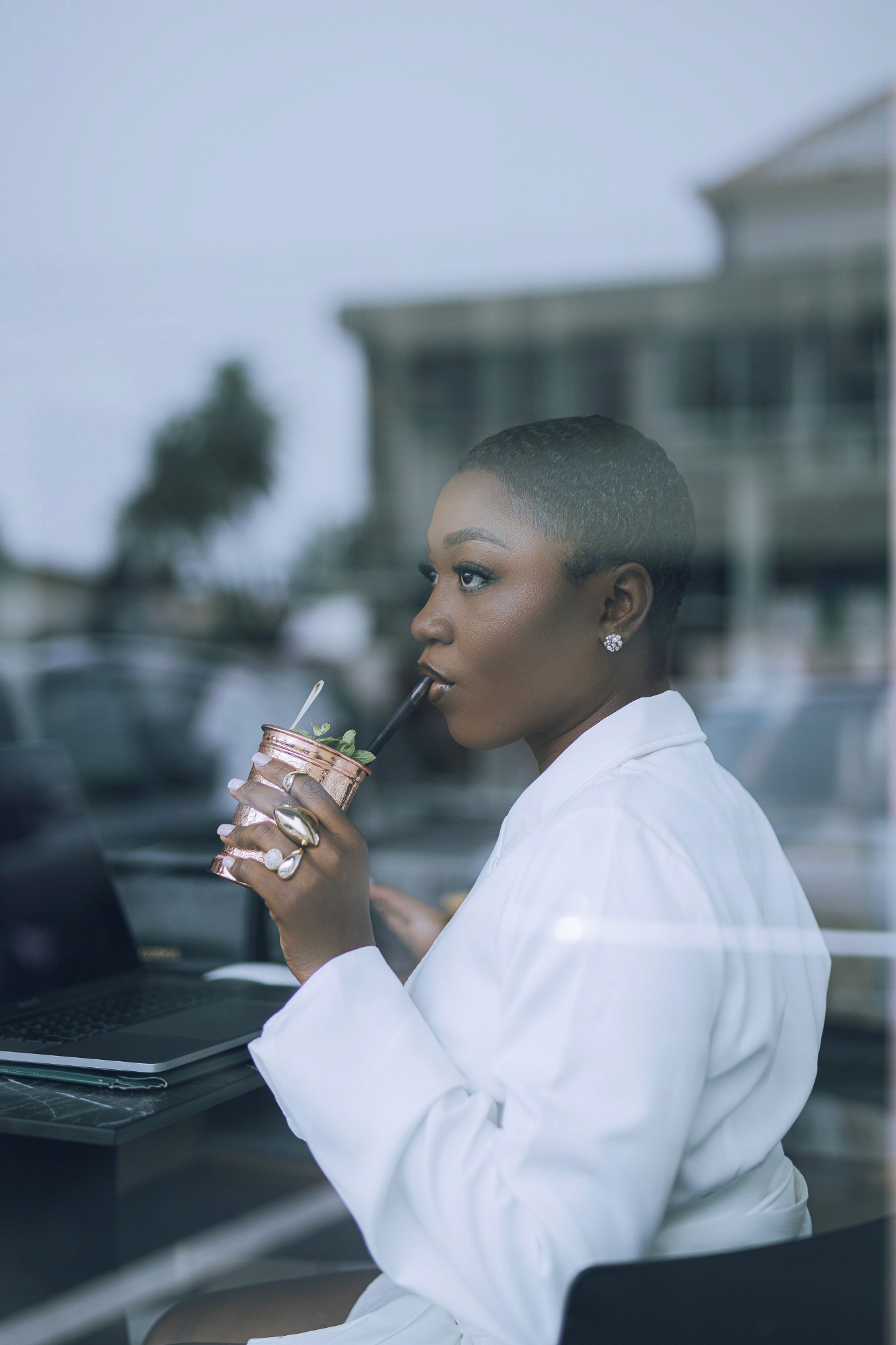
At some point, the question stops being, “Can I afford to do something?” and becomes, “Do I actually have enough time to enjoy it?”
You say you have three hours.
But do you?
There’s the drive. The parking. The time it takes to figure out which entrance you’re supposed to use because apparently putting that information on the website was asking way too much.
Then there’s the five or ten minutes it takes to get settled once you’re there. Plus, you’ve gotta factor in the drive home and that extra buffer you build in because life (school pickup, dinner, random errands) honestly couldn't care less that you were having a nice afternoon.
And just like that, your three-hour window is looking a whole lot more like two.
Maybe less.
THE THREE-HOUR MATH
THREE FREE HOURS
ISN’T REALLY
THREE FREE HOURS.
And that’s assuming your brain actually got the memo that you’re off.
Because having nothing on the calendar and having time that actually feels like yours are two very different things.
You can technically be “free” while mentally making a grocery list.
You can be sitting somewhere lovely and still thinking about the load of laundry you forgot to move, what everybody is eating later, whether you answered that text, and what time you need to leave so the rest of your day doesn’t completely unravel.
That’s time on the clock.
But is it really free time?
Not quite.
FREE TIME ISN’T ALWAYS FREE
There’s actually research behind this feeling.
According to 2025 data from the Bureau of Labor Statistics, women ages 35 to 44 averaged about 3.7 hours a day in the broad category of leisure and sports.
Which sounds pretty decent at first.
Until you keep reading.
Women in that same age group also averaged more than two hours a day on household activities, more than an hour and a half caring for household members, plus work and all the other pieces that make up a regular day. [1]
Now, those numbers are averages. They aren’t describing your specific Tuesday.
But they do make one thing pretty clear: seeing “3.7 hours of leisure” on paper does not mean somebody handed you 3.7 uninterrupted hours and said, “Have fun.”
Those hours can be chopped up.
Twenty minutes here.
Forty-five minutes there.
An hour after everybody goes to bed when, technically, yes, you could start a new hobby, but also…you’re tired.
There’s a difference between available time and usable time.
And there’s an even bigger difference between usable time and what I’d call unattached time.
Unattached time is the good stuff.
It’s the time that isn’t secretly assigned to something else.
You’re not supposed to be running an errand.
You’re not halfway listening for your phone.
You’re not squeezing in a grocery pickup on the way home just because you’re already out.
Nobody needs you to be anywhere for a minute.
Your brain gets to stop keeping tabs on everything for a little while.
Researchers have a term that gets surprisingly close to this: time affluence.
Generally speaking, it’s less about the exact number of free hours you have and more about whether you actually feel like you have enough time and some control over how you spend it. A recent review of the research found that greater perceived time affluence was generally associated with better psychological well-being. [2]
Basically, two hours that feel like yours can hit very differently from two hours that are technically open but mentally spoken for.
You probably didn’t need a research paper to tell you that.
But it’s nice to know somebody studied it.
WHEN TIME BECOMES THE EXPENSIVE PART
This is where the money piece gets interesting.
For some women, there comes a point when paying for a nice afternoon is easier than finding the time to have one.
That doesn’t mean money suddenly doesn’t matter.
And it definitely doesn’t mean everybody is out here casually dropping $200 on a random Tuesday.
It just means the scarce thing can change.
Maybe the museum ticket isn’t the hard part anymore.
Finding four uninterrupted hours might be.
Maybe you’re willing to pay for the pottery class.
You’d happily book the massage.
You’re down for the nice lunch, the cocktail at the pretty hotel bar, the cooking class, the garden, the show, whatever.
But if you finally get three hours to yourself, you are absolutely not trying to spend 45 minutes of them dealing with logistics that should’ve been simple in the first place.
At that point, convenience isn’t just convenient.
It’s part of what you’re paying for.
And there’s research for that too.
One study involving more than 6,000 adults across several countries found that people who spent money on time-saving services tended to report greater life satisfaction. In an experiment within that same research, working adults reported greater happiness after spending money on something that saved them time than after spending the same amount on a material purchase. [3]
The study was looking at things like outsourcing chores, not whether a museum needs better parking signage.
But the bigger idea tracks.
When time feels scarce, friction starts getting expensive.
AN OUTING CAN EAT ITSELF
This is why all the little annoying things suddenly matter so much.
Unclear directions.
Bad parking instructions.
An online reservation system that sends you through seven screens for absolutely no reason.
A venue that says “use the side entrance” as though there is only one side.
Showing up somewhere and realizing you were supposed to know a secret code, call a number, download an app, scan a QR code, and solve a small riddle before you can get inside.
On a wide-open Saturday, maybe you laugh it off.
When you have a two-hour window?
Now you’re irritated.
Because the outing is eating itself.
You came out to enjoy the experience, not spend a quarter of your available time trying to access it.
And I think that changes how we should judge whether something is actually worth doing.
Price still matters.
But so does what I’ve started thinking of as quality of experience per hour.
If I only have a limited window, how much of that time am I actually enjoying?
How much am I driving or waiting?
How much am I trying to figure out something that should’ve been clear before I left home?
How long does it take me to settle in?
And can I leave without turning the last 20 minutes into some frantic exit where all the relaxation I just paid for disappears before I make it out of the parking lot?
Sometimes if I have three hours, I’m intentionally planning something that takes two.
Not because I couldn’t do more.
Because I don’t want to.
I want enough time to get there without rushing.
I want my brain to arrive with me.
I want to enjoy the thing while I’m actually doing it.
And when it’s over, I want enough breathing room that I’m not immediately back in go-go-go mode before I even make it home.
The outing has to fit inside real life.
PROMISE WHAT IT IS
Atmosphere matters more too.
If you tell me somewhere is peaceful, it needs to actually feel peaceful.
If I’m coming there to unwind, make it unwind-friendly.
If the whole point is energy and excitement, great. Give me energy and excitement.
If you promise cozy, don’t give me bright overhead lights, metal chairs, and somebody dragging trash bags past my table every six minutes.
Promise what it is.
Because when you have limited time, you don’t want to spend half the outing trying to turn the place into the experience you thought you were getting.
Sometimes the more expensive option actually feels like the better value because it does what it said it was going to do.
The parking is easy.
The entrance makes sense.
The staff is welcoming.
The seat is comfortable.
The music is right.
The atmosphere matches the mood.
You can arrive, exhale, and get into it.
You’re not only paying for the meal, the ticket, the class, or the treatment.
You’re paying for how the whole thing feels.
And when your time is limited, that matters.

“ME TIME” SOUNDS NICE. REAL LIFE IS A LITTLE MESSIER.
This is also where the way we talk about women’s leisure starts to lose me.
Take a bath.
Take a nap.
Put your phone on Do Not Disturb.
Have a self-care night.
And listen, all of that sounds fantastic.
Until somebody is yelling through the bathroom door asking where their charger is.
Or your phone keeps ringing.
Or you’re trying to nap but you know you need to leave in 43 minutes.
Or your version of “me time” somehow turned into doing a 12-step skincare routine, journaling, stretching, drinking herbal tea, and accidentally giving yourself a new list of things you’re supposed to be doing.
Sometimes I don’t want to optimize my relaxation.
I just want to go somewhere.
That’s the part a lot of the usual advice misses.
Women’s leisure is often talked about like the biggest hurdle is giving ourselves permission to stop.
And sure, sometimes it is.
But sometimes permission isn’t the problem.
You have permission.
You have the money.
You have somewhere you’d genuinely like to go.
What you do not have is an entire day with absolutely nothing attached to it.
Maybe you have two hours before school pickup.
And you know that two hours doesn’t really mean two hours because you need to be back in that pickup line at a very specific time unless you want to spend the next 40 minutes questioning every decision that led you there.
So now you’re doing the real math.
How far can I go?
How long will parking take?
How much time will I actually get once I’m there?
Can I enjoy this without staring at the clock?
What time do I need to leave so I’m not stressed all over again?
That’s not failure to relax.
That’s just real life.
So maybe the better question isn’t, “How can I make more time for myself?”
Maybe it’s:
What can I genuinely enjoy in the time I actually have?
THE REAL LUXURY MIGHT BE UNATTACHED TIME
There’s something almost luxurious about a few hours that aren’t spoken for.
No errands hiding inside them.
No chores you feel like you should squeeze in because technically you have time.
No waiting around for everybody else to decide what they want to do.
No coordinating six schedules just to make one simple plan happen.
Just a pocket of time that belongs to you.
And once you start seeing leisure this way, a good outing starts looking a little different.
It respects the window.
It doesn’t create unnecessary friction.
It delivers the atmosphere it promised.
It gives you enough experience to make getting dressed and leaving the house feel worth it.
And it fits into the life you actually have, not some imaginary one where every Saturday is wide open, nobody ever needs anything, and parking is always free and obvious.
Maybe that’s one of the quieter shifts that happens as life gets fuller.
You stop thinking only about how much something costs.
You start thinking about what it costs you in time too.
So the next time you look at the clock and realize you have three hours, maybe the question isn’t how much you can squeeze into them.
Maybe it’s what would make those hours feel like they truly belong to you.
Something easy to get to. Worth getting dressed for. Good enough that you stop checking the time for a while.
Because three free hours may not really be three free hours.
But they can still be really good ones.
Sources
[1] U.S. Bureau of Labor Statistics, American Time Use Survey — 2025 annual averages, women ages 35–44: BLS age-by-sex table.
[2] Sang Yong Yoon (2026), “Time affluence and health: a scoping review of conceptual and methodological patterns,” Frontiers in Public Health 14:1824268: full article.
[3] Ashley V. Whillans et al. (2017), “Buying time promotes happiness,” Proceedings of the National Academy of Sciences 114(32):8523–8527: PubMed.